简体中文
简体中文  English
  日本語
日本語  한국어
한국어  Français
  Deutsch
  Español
  Português
  Русский
  العربية
  ไทย
ไทย  Tiếng Việt

1. Why Does the Manufacturing Process Determine Product Quality?
An air reservoir is a pressure vessel. Its working environment involves high pressure, vibration, temperature changes and corrosive media. A defective reservoir can develop weld cracking, air-leak failure or even rupture on the road, directly threatening lives. Every step of the manufacturing process therefore directly affects the final quality and reliability of the product.
💡 Key point: Quality is not inspected in — it is built in. Inspection can only detect defects; excellent manufacturing processes reduce defects at the source.
2. Six Core Manufacturing Steps in Detail
Step 1: Aluminum Sheet Cutting — Quality from the Source
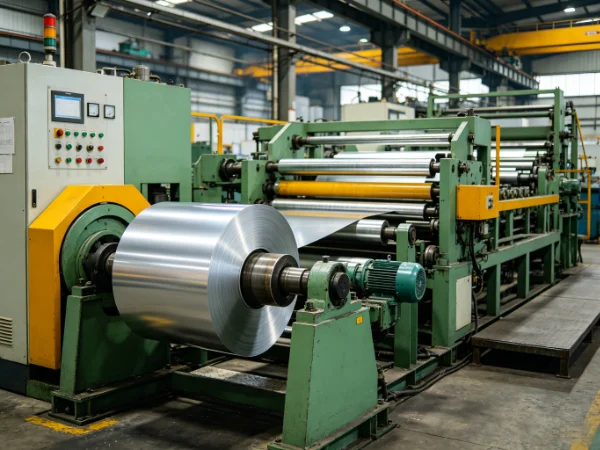
A high-quality aluminum reservoir starts with high-quality raw material. Leading manufacturers select 5083-H112 or 5052-H32 aluminum sheet and strictly require an attached EN 10204 3.1 material certificate.
- Incoming inspection: every batch of aluminum sheet is verified for chemical composition, mechanical properties and surface quality to ensure the raw material meets standards.
- Precision cutting: hydraulic shears and an automatic cut-to-length line achieve cutting accuracy of ±0.5 mm, laying the foundation for subsequent forming.
Step 2: Roll Forming — Shaping the Perfect Shell
A three-roll bending machine rolls the sheet into a shell; combined with roundness control tooling, shell roundness deviation is kept within 1 mm. Roundness is a key prerequisite for subsequent weld quality and shell strength.
Step 3: Laser-Guided Welding — Core Competitiveness
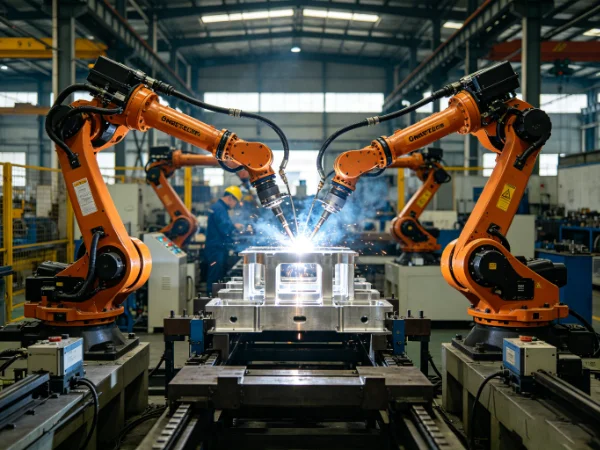
Welding is the most critical step in reservoir manufacturing. Advanced processes use MIG welding combined with laser-guided positioning, applying segmented current control.
- Laser positioning: precisely guides the torch position to ensure highly consistent weld placement.
- Segmented current control: current is adjusted at different points along the weld to ensure uniform width and height, free of undercut, porosity and other defects.
- Weld acceptance rate: leading levels reach 98% and above, far above the industry average.
Step 4: End-Cap Machining — A Perfect-Fit Guarantee
Dedicated equipment performs precision operations on the end caps — edge trimming, necking and hole punching — ensuring the fit between cap and shell (tolerance ≤0.1 mm). This is the foundation of sealing after final assembly.
Step 5: Air-Tightness Testing — The Zero-Defect Commitment
This is the "ultimate test" every reservoir faces before leaving the factory. Using SMC leak sensors from Japan, 100% of products are tested.
- The equipment automatically pressurizes, holds and tests; any micro-leak triggers an immediate automatic alarm and quarantine.
- No nonconforming product reaches the next step, ensuring zero-defect delivery.
Step 6: Surface Treatment & Outbound — Perfect Delivery
After cleaning, drying and marking (including a unique traceability code), products receive protective packaging and enter standardized warehousing. Under the IATF 16949 system, every product's production information and inspection data are fully recorded for two-way traceability.
3. Quality Control System: Full-Process Protection from Incoming to Outgoing
Manufacturing processes are the foundation; quality control is the guarantee. A sound quality control system ensures the consistency and traceability of product quality.
1. Incoming Material Inspection
All aluminum sheet is re-inspected against the EN 10204 3.1 standard for chemical composition, mechanical properties and surface quality — the three key items — eliminating material defects at the source.
2. Process Control
Welding Procedure Specification (WPS) qualification and welder certification are implemented to keep all factors — man, machine, material, method, environment — under control. Key steps such as welding, roll forming and stamping have three checkpoints: first-article, patrol and final inspection.
3. Finished-Product Verification
An in-house laboratory is equipped with a full set of testing equipment:
- Burst test machine: verifies the ultimate pressure-bearing capacity.
- Salt-spray test chamber: verifies the corrosion resistance of the aluminum oxide film.
- Metallographic microscope and hardness tester: inspect the weld heat-affected zone microstructure and material strength.
- Pressure pulsation test bench: simulates fatigue life under real operating conditions.
4. Traceability System
Every product is given a unique serial number, traceable to the production batch, operator, raw-material heat number and all inspection records. If a problem occurs, the root cause can be quickly identified and corrective action taken.
4. How Should Customers Evaluate a Supplier's Manufacturing Strength?
When selecting an aluminum air reservoir supplier, we recommend evaluating from the following dimensions:
- Check system certification: does the supplier hold IATF 16949:2016? It is the "entry ticket" for automotive-industry suppliers.
- Review process equipment: does the supplier have laser-guided welding equipment? What is the weld acceptance rate?
- Visit the production site: is on-site management standardized? Is 5S in place? Are worker operations standard?
- Review quality records: can the supplier provide complete inspection reports and traceability records?
- Ask about customer cases: does the supplier have experience supplying reputable OEMs?
Conclusion
The quality of an aluminum air reservoir lies in the details of every step. From aluminum sheet cutting to finished outbound, each step's pursuit of excellence ultimately determines the product's ten-year performance on a commercial-vehicle chassis. Choosing a supplier with transparent processes, complete systems and full traceability means choosing the most reliable guarantee for your vehicle safety and operating efficiency.