简体中文
简体中文  English
  日本語
日本語  한국어
한국어  Français
  Deutsch
  Español
  Português
  Русский
  العربية
  ไทย
ไทย  Tiếng Việt
1. Why Have Aluminum Air Reservoirs Become Mainstream?
The air reservoir is a core component of a vehicle's braking system. It stores compressed air from the air compressor and supplies a stable air source to subsystems such as braking and air suspension. Traditional steel reservoirs have long suffered from two major problems: excessive self-weight and internal corrosion.
Lightweighting: A Significant 60%–70% Weight Reduction
Aluminum alloy has only one-third the density of steel. Take 5083 aluminum: its density is 2.66 g/cm³, so at equal volume an aluminum reservoir is 60%–70% lighter than a steel unit. On a 12-meter bus, replacing all reservoirs can cut weight by about 50–80 kg, which translates directly into greater payload or longer range.
Following the enforcement crackdown on trucks registered below their actual rated capacity, vehicle lightweighting has become standard practice. As a major weight-reduction measure, aluminum air reservoirs have seen significantly wider adoption — from being standard only on some premium models to being listed as standard equipment on most models across brands today.
Never Rusts: Eliminating the Hidden Risks in Braking Systems
Traditional steel reservoirs tend to rust inside during service. Rust particles can enter the brake lines and cause brake valves to seize or fail, directly endangering driving safety. An aluminum alloy naturally forms a dense aluminum oxide (Al₂O₃) protective film on its surface, raising the base material's corrosion resistance by more than 30% and providing permanent rust protection without any coating. This means the braking system always receives a clean, reliable supply of compressed air.
2. 5083 vs 5052: How to Choose?
The mainstream aluminum alloy reservoir materials on the market today are 5083 and 5052, both aluminum-magnesium (Al-Mg) alloys, though each has a different performance focus.
5083 Aluminum Alloy — The First Choice for Heavy-Duty Commercial Vehicles
5083 has a magnesium content of 4.0%–4.9% and a measured tensile strength consistently above 290 MPa, far higher than 5052. Its core advantages appear in three areas:
- Excellent weldability: TIG welding with 5356 filler wire gives a joint strength of 85%–95% of the base material, far above 6xxx alloys such as 6061 (usually only about 70%), making it ideal for automatic circumferential seam welding of reservoirs.
- Marine atmospheric corrosion resistance: highly resistant to salt-spray environments, suitable for special conditions such as coastal port machinery and refrigerated trucks.
- Excellent low-temperature performance: in cold regions or special gas filling conditions, strength and elongation do not undergo the brittle transition seen in carbon steel.
5052 Aluminum Alloy — The Cost-Effective Choice for Light Commercial Vehicles
5052 has a magnesium content of 2.2%–2.8%. With moderate strength, excellent formability and controlled cost, it suits conventional reservoir products for passenger cars and light commercial vehicles.
📌 Conclusion: For heavy trucks, construction machinery and high salt-spray environments → choose 5083; for light commercial vehicles and cost-sensitive projects → choose 5052.
3. Precise Manufacturing Processes Ensure Quality
High-quality aluminum reservoirs depend on rigorous manufacturing processes. The mainstream approach uses 5083 aluminum sheet 2.8–3.0 mm thick through the following core steps:
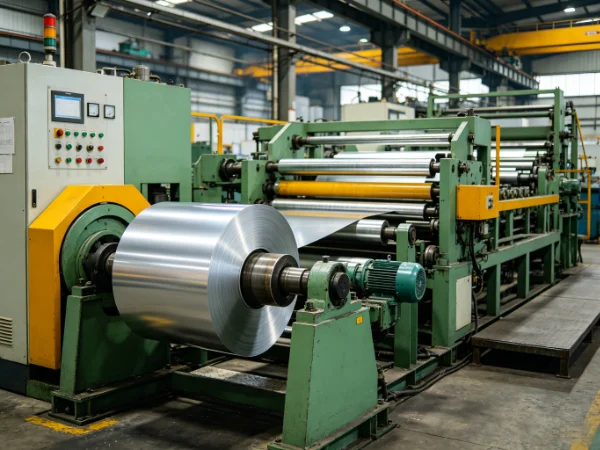
- Cutting & forming: the sheet is film-protected to prevent scratches during processing; the shell and end caps are formed by stamping and roll-bending.
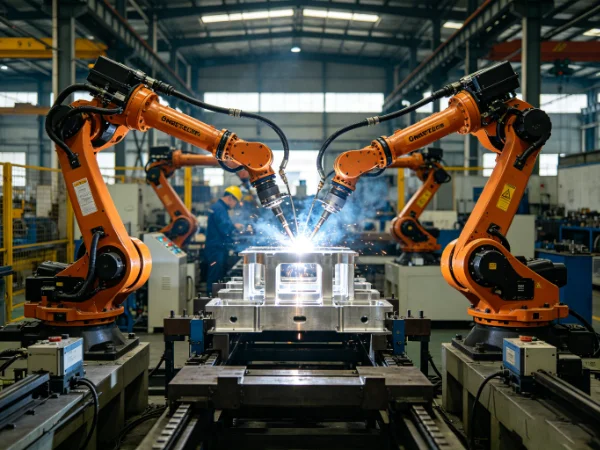
- Welding: longitudinal and circumferential seams are welded with non-consumable TIG (GTAW); the weld bead is clean and high quality, with a stable process.
- Leak testing: per QC/T 200-2015, the pressure drop of a single-chamber reservoir must not exceed 0.75 kPa, ensuring zero leakage.
- Pressure validation: test pressure is 5 times the rated working pressure, held for 5 minutes; the shell must show no cracks and permanent deformation must not exceed 1%.
4. Global Market Trends and Application Outlook
From a global perspective, demand for aluminum air reservoirs keeps expanding. In North America, brands such as East Manufacturing position their aluminum reservoirs as a direct replacement for steel units that completely solves rusting caused by road salt. The European market is driven by strict carbon-emission regulations, making lightweighting even more urgent. In China, sustained lightweighting policy continues to push annual demand growth for aluminum reservoirs above 15%.
Key application scenarios include:
- Heavy trucks & dangerous-goods transport: the 5083 aluminum wall never rusts, especially suitable for gas-system components on LNG trucks
- New-energy buses: cutting unsprung mass is key to extending range, and aluminum reservoirs are an ideal choice
- Trailers & semi-trailers: weight savings translate directly into greater payload
- Construction machinery & port equipment: corrosion resistance pays off in high salt-spray environments
Conclusion
Driven by both lightweighting and safety in commercial vehicles, aluminum air reservoirs have moved from a "premium option" to "industry standard." Whether 5083 or 5052, aluminum-magnesium alloys — with their outstanding lightweight, corrosion-resistant and recyclable advantages — are fundamentally changing how traditional braking systems are designed and manufactured. For fleets and manufacturers pursuing operating efficiency and safety, choosing aluminum reservoirs means choosing future-ready competitiveness.