简体中文
简体中文  English
  日本語
日本語  한국어
한국어  Français
  Deutsch
  Español
  Português
  Русский
  العربية
  ไทย
ไทย  Tiếng Việt
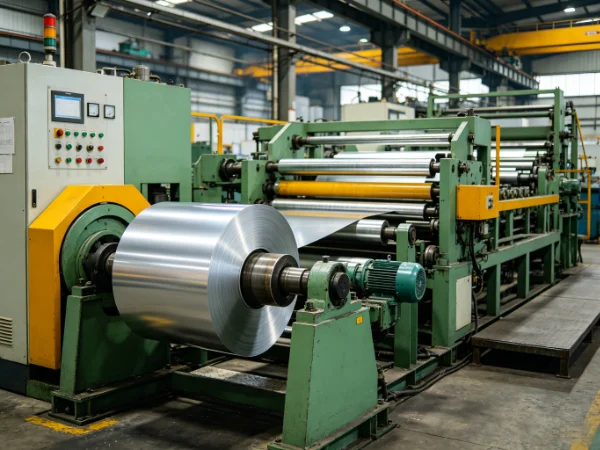
For commercial-vehicle air reservoirs, material selection directly determines the product's safety, durability and whole-life-cycle cost. As the two most mainstream materials for aluminum air reservoirs, 5083 and 5052 each hold a distinct performance position. This article systematically explains the technical differences and selection logic between the two materials.
1. Why the 5xxx Al-Mg Alloys?
5083 and 5052 both belong to the Al-Mg system (aluminum-magnesium alloys), where magnesium is the main alloying element[citation:1]. The 5xxx series has become the mainstream choice for reservoir manufacturing thanks to three core advantages:
- Not heat-treatable: strength is mainly obtained through work hardening. The weld heat-affected zone does not suffer a sharp strength drop from heat treatment, ensuring overall mechanical consistency of the shell structure[citation:4].
- Naturally corrosion-resistant: a dense aluminum oxide (Al₂O₃) protective film forms naturally on the surface, raising the base material's corrosion resistance by more than 30%[citation:5][citation:1].
- Excellent weldability: widely recognized as one of the best aluminum alloys against weld hot cracking, ideal for automatic circumferential seam welding of reservoirs[citation:4].
📌 Industry consensus: 5052 and 5083 aluminum sheet, proven in mass production, deliver stable performance and are the standardized preferred materials for reservoir manufacturing[citation:3][citation:6].
2. 5083 vs 5052: Performance Comparison
1. Chemical Composition and Strength
The core difference between the two materials lies in magnesium content, which determines their strength grade[citation:1][citation:4]:
- 5083 aluminum: magnesium content 4.0%–4.9%, measured tensile strength consistently above 290 MPa, the first choice for heavy-duty commercial vehicles[citation:4].
- 5052 aluminum: magnesium content 2.2%–2.8%, moderate strength (210–260 MPa), excellent formability, the cost-effective choice for light commercial vehicles and cost-sensitive projects[citation:1][citation:11].
2. Physical Property Comparison
Both share the core advantages of lightweighting and corrosion resistance[citation:5]:
- Density: 5083 ≈ 2.66 g/cm³, 5052 ≈ 2.68 g/cm³, both only one-third that of carbon steel (7.85 g/cm³)[citation:4].
- Modulus of elasticity: both 71 GPa, identical stiffness design parameter.
- Low-temperature performance: 5083 does not undergo the brittle transition of carbon steel in cold conditions, providing higher safety[citation:4].
3. Welding Performance Differences
Both use 5356 filler wire for TIG welding, but the welding results differ:
- 5083: weld joint strength reaches 85%–95% of the base material, one of the recognized best aluminum alloys against weld hot cracking[citation:4].
- 5052: welding performance is also excellent, but weld strength in extreme high-stress environments is slightly lower than 5083.
3. Selection Guide by Operating Condition
* Thickness range: commercial-vehicle reservoir shells are typically 2.0–5.0 mm; high-pressure reservoirs can reach 5.0–8.0 mm[citation:3][citation:6][citation:7]
4. Engineering Application Cases
Case 1: Heavy-Truck Brake Reservoir (5052-H32)
A leading domestic commercial-vehicle OEM, design pressure 1.0 MPa. The shell is roll-formed and welded in 5052-H32 (4.0 mm) with stamped end caps. First-pass weld acceptance rate 98%, 65% lighter than carbon steel units, passed 150,000 km road durability testing, annual supply exceeding 100,000 sets with zero air leakage[citation:3][citation:8].
Case 2: Metro Air-Supply Reservoir (5083-H112)
Air-supply reservoir for urban metro systems, design pressure 1.2 MPa, EN 13445 certified, design life over 25 years. Shell and heads use 5083-H112 (6.0 mm); helium leak rate ≤5×10⁻⁷ Pa·m³/s, with 5 years of in-service operation showing no leakage or corrosion[citation:6][citation:8].
5. Conclusion
Although 5083 and 5052 both belong to the 5xxx Al-Mg alloys, they have a clear division in application positioning:
✅ Choose 5083
Heavy trucks, construction machinery, rail transit, coastal high-salt-spray environments and LNG low-temperature service — applications requiring higher strength and ultimate corrosion resistance[citation:1][citation:4].
✅ Choose 5052
Light commercial vehicles, buses, trailers and medium/low-pressure reservoirs — a proven choice balancing overall performance and economy[citation:1][citation:11].
With commercial-vehicle lightweighting accelerating, aluminum reservoirs replacing traditional carbon steel products has become a clear trend. 5083 and 5052 each meet the needs of different application scenarios, and with outstanding advantages in scaled production and recycling, they will keep expanding their use in the vehicle-mounted reservoir market[citation:1][citation:5].